Best Time to Visit the Azores Portugal for Luxury Nature Escapes 2026
The Azores are not a destination you visit for predictable Mediterranean heat or guaranteed beach weather. They are something rarer: a nine-island volcanic archipelago where mist, light, and landscape combine into an atmosphere that feels more like the Pacific Northwest meets Iceland meets the Mediterranean. For luxury travelers seeking a nature escape that feels wild, unspoiled, and deeply restorative, the question of timing matters — but not in the way most people expect. The best time to visit the Azores for luxury travel depends less on chasing perfect weather and more on matching your preferred experiences with the islands' seasonal rhythms.
Unlike crowded Caribbean islands or predictable European beach resorts, the Azores do not have a short, intense high season followed by a dead low season. Instead, each season offers a different version of luxury: spring for wildflowers and whale migrations, summer for the warmest hiking conditions, autumn for dramatic light and thermal baths, winter for solitude and storm-watching from a glass-fronted eco-lodge. Understanding these seasonal personalities is the key to planning a luxury Azores escape that feels perfectly timed for you.
Azores at a Glance – Luxury Travel Seasons 2026
- Spring (Mar–May): Wildflowers, whale migration starts, moderate crowds
- Summer (Jun–Aug): Warmest weather, peak hiking, highest prices, more visitors
- Autumn (Sep–Oct): Best for thermal springs, dramatic light, fewer crowds
- Winter (Nov–Feb): Solitude, lowest prices, storm-watching, geothermal comfort
Why the Azores Attracts Luxury Nature Travelers in the First Place
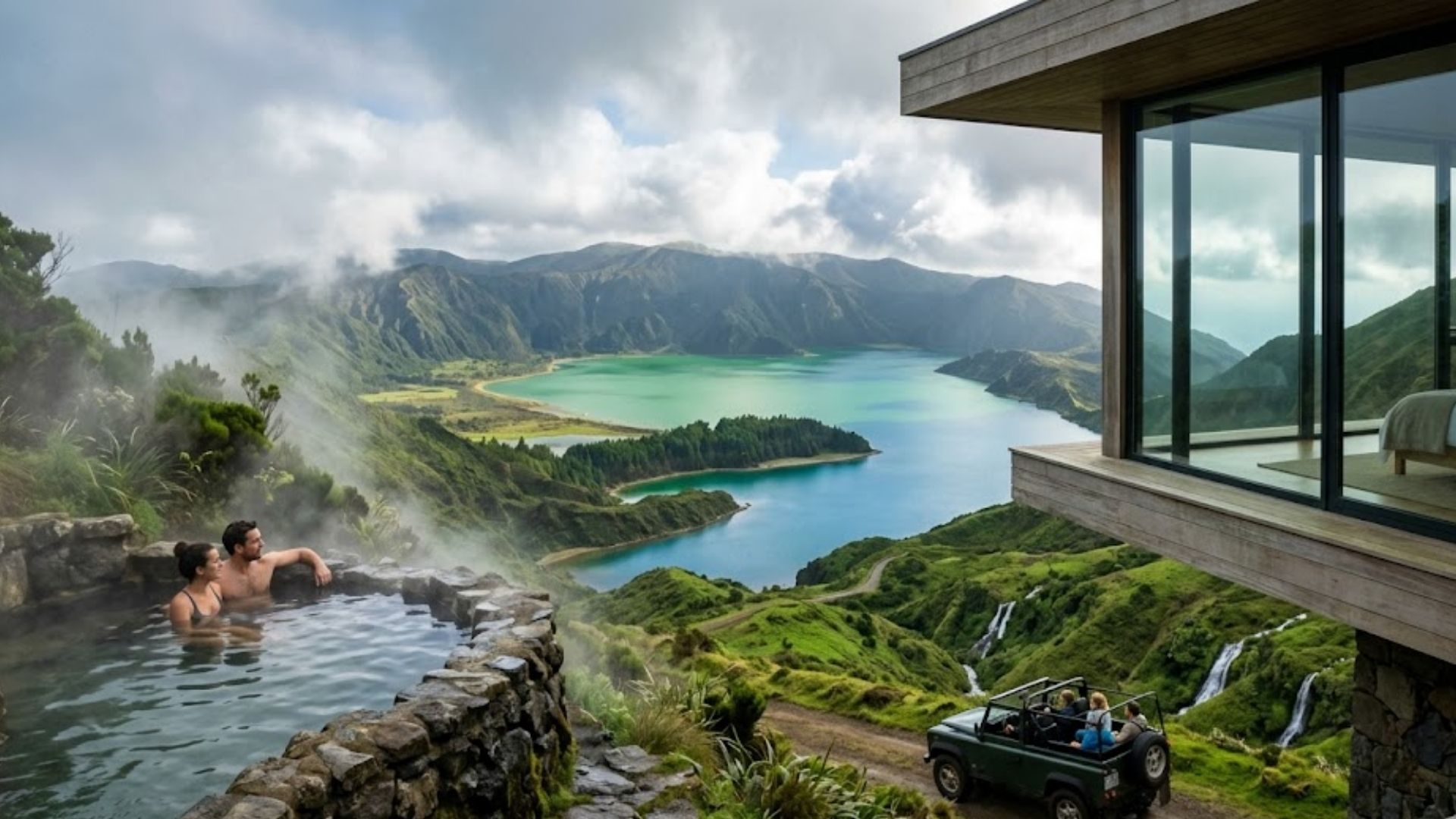
Before diving into monthly timing, it is worth understanding why the Azores have become a rising star in luxury nature travel. This is not a destination of mega-resorts or overwater villas. Instead, the Azores offer something more subtle: volcanic crater lakes in impossible shades of blue and green, waterfalls that tumble directly into the ocean, geothermal springs where you soak while mist rises from the earth, calderas you can hike into, and some of the best whale watching on the planet. Luxury here means eco-lodges with glass walls overlooking crater lakes, private Jeep tours to hidden viewpoints, farm-to-table dining that tastes like volcanic soil, and the deep silence of islands that remain genuinely off most travelers' radar.
The Azores share a similar untamed appeal with other emerging luxury nature destinations like Belize, the Cook Islands, or the wilder corners of Alaska. They reward travelers who value atmosphere over guaranteed sunshine.
Spring (March to May): Wildflowers, Whales, and Waking Landscapes
Spring is arguably the most beautiful season in the Azores for nature lovers. The islands explode into color with hydrangeas (which bloom later, from May to June), azaleas, and countless wildflowers carpeting the hillsides. Temperatures are mild — daytime highs between 15°C and 19°C (59°F–66°F) — making hiking comfortable without overheating. Rainfall is still present, but it rarely lasts all day. Instead, spring showers pass quickly, leaving behind impossibly green landscapes and dramatic clouds that make photography unforgettable.
For luxury travelers, two spring experiences stand out. First, whale watching reaches its peak starting in April, with blue, fin, sei, and sperm whales migrating past the islands. Private whale-watching charters offer an intimate, respectful way to see these giants. Second, the landscapes are at their lushest. Sete Cidades, Lagoa do Fogo, and Furnas Valley look almost otherworldly in spring green. Crowds are still manageable, hotel prices are moderate, and the atmosphere feels optimistic and fresh.
Spring Luxury Tip
Book a private guided hike through the hydrangea-lined trails of Faial or Flores in late May. The blooming hydrangeas combined with crater lake views are almost too beautiful to be real.
Summer (June to August): Warmest Weather, Peak Hiking, and Higher Prices
Summer is the warmest and driest season in the Azores, with average highs between 22°C and 25°C (72°F–77°F). This is the time when island hiking is most comfortable, when swimming in natural ocean pools feels inviting, and when the famous hydrangeas are in full, spectacular bloom along every roadside. However, summer is also the peak tourist season. While the Azores never feel as crowded as the Mediterranean, you will share viewpoints, restaurants, and trails with more visitors. Hotel prices reach their annual high, and advance booking is essential for the best luxury eco-lodges.
For luxury travelers who prioritize warm, stable weather for extended hiking, kayaking, canyoning, and exploring multiple islands, summer is still an excellent choice. The key is booking early — ideally six to nine months in advance — and choosing accommodations that offer privacy and seclusion even when the islands are busiest. Consider staying on less-visited islands like Pico, Flores, or Graciosa to escape the modest summer crowds on São Miguel.
This principle — choosing the right base to avoid crowds — applies to many luxury nature destinations, from Capri and the Amalfi Coast to Santorini. The Azores are no exception.
Summer Luxury Summary
- Pros: Warmest weather, best for swimming and canyoning
- Cons: Highest prices, most crowded, need advance booking
- Best for: Hikers, active travelers, families
Autumn (September to October): Thermal Springs, Golden Light, and Fewer Crowds
For many luxury travelers who have discovered the Azores, autumn is the secret sweet spot. Summer crowds have dispersed, temperatures remain pleasant (18°C–22°C / 64°F–72°F), and the light turns golden and dramatic. The ocean is still warm enough for swimming in September, and October brings misty mornings that make the crater lakes look hauntingly beautiful. Hotel prices drop significantly after mid-September, and availability at top eco-lodges improves.
Autumn is also the perfect season for the Azores' most luxurious slow activity: geothermal hot springs. Furnas Valley on São Miguel is famous for its thermally heated pools, where you can soak surrounded by fumaroles and cooking steam vents. On Terceira, the Algar do Carvão lava tube offers a different kind of underground geothermal wonder. The cooler air makes bathing in 38°C–40°C (100°F–104°F) spring water feel deeply restorative. Private spa experiences at luxury properties reach their seasonal peak in autumn.
Whale watching continues into October, and hiking conditions remain excellent before winter rains intensify. For travelers who value atmosphere, softer light, and a sense of having the trails to themselves, autumn is often the best time to visit the Azores for luxury nature escapes.
"Autumn in the Azores feels like the islands exhale. The crowds leave. The mist arrives. The thermal baths become sacred."
Winter (November to February): Solitude, Storm-Watching, and Geothermal Comfort
Winter in the Azores is not for everyone, but for a specific kind of luxury traveler, it is perfect. This is the season of dramatic Atlantic storms, moody skies, crashing waves, and landscapes that feel raw and powerful. Temperatures are cool (14°C–17°C / 57°F–63°F), rainfall is frequent, and many hiking trails become muddy. However, winter also offers the lowest hotel prices, extreme solitude, and the most intense sense of being somewhere truly wild.
The luxury of winter in the Azores lies indoors (and in thermal waters). Imagine storm-watching from a floor-to-ceiling window in a glass-walled eco-lodge, a fire burning, a glass of local wine in hand. Imagine soaking in geothermal hot springs while rain pounds the volcanic rock around you. Imagine having crater lake viewpoints entirely to yourself. That is winter in the Azores. It is not a beach holiday. It is a retreat. It is a reset.
For travelers who love the solitude of off-season travel in places like Alaska's wilderness lodges, winter in the Azores offers a similar kind of rugged luxury. It is also an excellent time for a longer multi-island itinerary since you are not rushed by daylight or crowds.
Winter Luxury Tip
Book an eco-lodge on São Miguel with direct views of the north coast. Storm-watching from a heated indoor pool or glass-walled living room is one of the most memorable luxury experiences the Azores offer.
Monthly Breakdown for Luxury Travel Planning
January–February: Lowest prices, extreme solitude, best for storm-watching and thermal baths. Whale watching possible, especially for sperm whales. Some restaurants and tour operators reduce hours. Best for travelers who value quiet and atmosphere over guaranteed outdoor activities.
March–April: Spring arrives. Wildflowers begin blooming. Whale migration picks up. Temperatures still cool but hiking becomes enjoyable. Prices remain moderate. A beautiful shoulder season for travelers who want to beat the summer rush.
May–June: The sweet spot for many. Hydrangeas begin blooming in late May. Weather is warm but not hot. Crowds are manageable. Prices have not yet peaked. Hiking, whale watching, kayaking, and canyoning are all excellent.
July–August: Peak season. Highest prices. Warmest weather. Best for swimming and extended water activities. Book everything well in advance. Consider less-visited islands for more privacy.
September: The perfect autumn month. Warm weather continues. Crowds thin after mid-month. Great hiking, whale watching continues. Thermal springs feel wonderful. Excellent value for luxury travelers.
October–November: Low season returns. Dramatic light and mist. Cheapest prices after early October. Good for photography, thermal experiences, and slow, itinerary-free travel. Some tour operations reduce frequency.
December: Festive season brings some visitors. Still quiet compared to summer. Storm-watching at its most dramatic. Cozy, atmospheric, and deeply restorative. A wonderful choice for a luxury Christmas escape.
How Many Days Do You Need in the Azores for a Luxury Trip?
For a true luxury nature escape, plan at least seven to ten days in the Azores. This allows you to explore two or three islands properly without rushing. A common luxury itinerary includes four to five nights on São Miguel (the main island with most luxury accommodations, crater lakes, and thermal springs) and three to four nights across one or two central or western islands like Pico (volcano climbing and wine), Faial (harbor and whale watching), or Flores (waterfalls and remotest beauty).
This pacing philosophy — deeper time in fewer places — is consistent with the best approaches to luxury travel in Europe, Bali, and multi-island journeys like Hawaii. The Azores reward slowness.
How to Get to the Azores from the USA in 2026
One of the Azores' advantages for American luxury travelers is surprisingly easy access. Azores Airlines (SATA) offers direct flights from Boston (BOS) and New York (JFK) to Ponta Delgada (PDL) on São Miguel, with flight times of roughly five to six hours. United Airlines also operates seasonal direct service from Newark (EWR). From the West Coast, connections through Boston, New York, or mainland Portugal (Lisbon or Porto) add a stop but remain manageable. Business class options are available, although the Azores are not served by flagship international carriers with lie-flat beds on every flight.
For travelers used to nonstop luxury service to destinations like the Maldives or Bora Bora, the Azores require a small adjustment in expectations. But the short flight time from the East Coast — as quick as flying to Hawaii from the West Coast — makes the Azores one of the most accessible wild nature destinations for Americans.
Where to Stay for Luxury in the Azores
Luxury accommodations in the Azores are boutique and eco-focused rather than large and opulent. On São Miguel, the White Exclusive Suites & Villas in Ponta Delgada offers contemporary design and excellent service. The Octant Furnas (formerly Pedras do Mar) sits inside Furnas Valley's geothermal zone, with thermal pools and direct access to hiking. Sensi Azores Nature & Spa in Ginetes is a hillside retreat with stunning ocean and crater views. On Pico, the Lava Homes offers private volcanic stone villas overlooking the Atlantic and Mount Pico.
For the ultimate luxury nature experience, consider splitting your stay between a standard luxury hotel on São Miguel and a remote eco-lodge on Flores or a wine-country villa on Pico. The variety of landscapes across the archipelago makes island-hopping a genuine luxury, not a logistical burden — provided you plan with expert help.
So, When Is the Best Time to Visit the Azores for Luxury Nature Escapes in 2026?
The honest answer is: it depends on what you want. For warm hiking and peak wildflower beauty, May through June is the sweet spot. For the best balance of good weather, lower prices, and thermal soaking comfort, September is nearly perfect. For solitude, dramatic light, and storm-watching from a cozy eco-lodge, winter months offer a different but equally valuable kind of luxury. Only travelers seeking guaranteed hot, dry, crowd-free weather should reconsider — that version of the Azores does not exist. But that is also precisely why the Azores feel so special. They are real. They are wild. And they reward travelers who come with curiosity, respect, and the willingness to embrace whatever weather the Atlantic delivers.
The best time to visit the Azores for luxury nature escapes is ultimately when you can go without rushing. Plan for at least a week. Book a glass-fronted room. Hire a private guide for at least one day. Soak in thermal springs. Eat cozido cooked by geothermal steam in Furnas. Watch whales pass in spring or autumn. And let the islands do what they do best: remind you that nature, when left wild and respected, is the ultimate luxury.
Related Travel Guides
- How to Plan a Luxury Europe Trip Without Feeling Rushed 2026
- Best Time to Visit Fiji for Luxury Honeymoons from the USA 2026
- Best Time to Visit Tahiti & French Polynesia for Luxury Vacations 2026
- Luxury Alaska Wilderness Lodge Guide: Costs & Best Time 2026
- 10 Mistakes Americans Make Traveling to Turkey First Time 2026
Plan a Refined Azores Nature Escape with Xpert Trips
From choosing the perfect season to booking eco-lodges with crater lake views, arranging private whale watching, and designing a multi-island luxury itinerary, Xpert Trips can help you experience the Azores in all their wild, volcanic beauty — without logistical stress.
Start Planning Your JourneyCurated by Xpert Trips — Luxury Travel Specialists