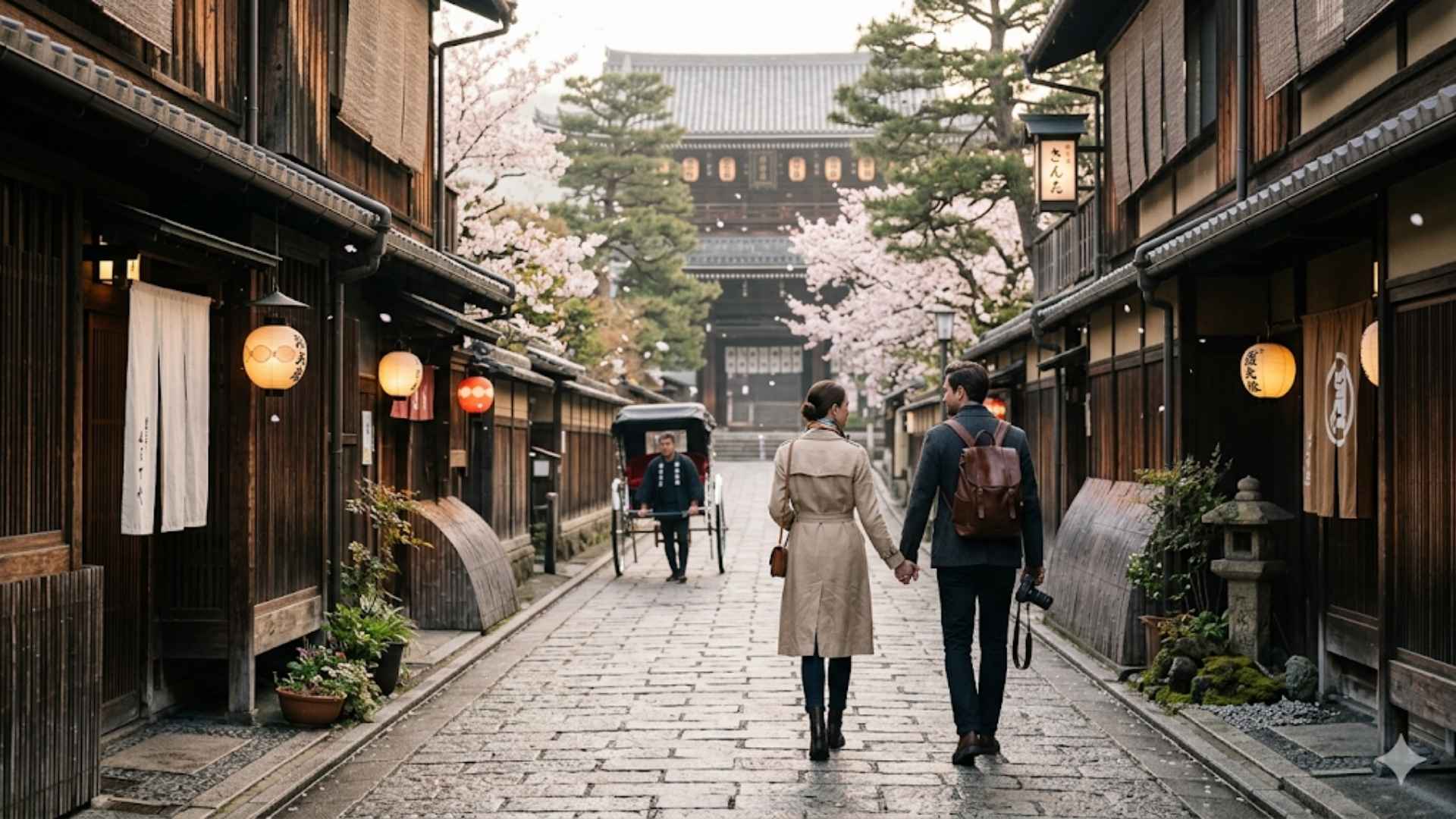
What a Day in Kyoto Japan Feels Like for Luxury Travelers 2026
Kyoto is not a destination that should be rushed. It is not a city that reveals itself loudly. And it is definitely not a place that feels best when approached like a checklist of temples, shrines, bamboo groves, and famous photo spots. For luxury travelers in 2026, Kyoto feels most memorable when it is experienced with space, intention, and a calm sense of rhythm. That is the difference between simply visiting Kyoto and actually feeling Kyoto.
A day here does not feel like a nonstop sightseeing race. It feels more atmospheric than that. More refined. More sensory. The sounds are softer. The transitions matter more. A quiet stone lane in the morning, tea served with precision, the filtered light inside a temple garden, the elegance of a private kaiseki dinner, the near-theatrical beauty of evening streets in Gion — all of it combines into an experience that feels intimate rather than loud.
That is also why Kyoto is such an important part of Japan luxury travel planning. Travelers comparing Japan vs South Korea often realize that Japan offers a very specific form of refinement, and Kyoto is one of the clearest expressions of that. It is also why first-time travelers who ignore pacing often make mistakes similar to the ones covered in this Japan first-time guide. Kyoto rewards depth, not speed.
What Makes Kyoto Feel Luxurious
- Quiet beauty instead of obvious excess
- Exceptional service delivered with restraint
- Seasonal food, gardens, and cultural detail
- Private experiences that feel intimate and personal
- Slower pacing that lets the city emotionally unfold
Early Morning in Kyoto Feels Almost Sacred
The best Kyoto luxury days begin early. Not because of productivity, but because the city has a completely different emotional tone in the morning. Before the crowds gather, Kyoto feels almost suspended in time. The streets are quiet. The air feels cooler and cleaner. Temple paths, garden entrances, and old wooden neighborhoods carry a sense of stillness that disappears later in the day.
For luxury travelers, this is one of the first real lessons Kyoto teaches: privilege here is often access to calm. It is the ability to experience beauty before noise interrupts it. A thoughtful Kyoto itinerary may begin with an early private walk through Higashiyama, a quiet temple visit, or a slow start in the gardens of a refined ryokan. Instead of trying to consume the city, you let the city set the tone.
This is similar to the emotional value of early hours in places like Petra or the atmosphere-first pacing described in Hoi An. Some destinations feel strongest when experienced before the world fully wakes up. Kyoto absolutely belongs in that category.
“In Kyoto, luxury often begins with silence.”
Breakfast Is Not Just a Meal — It Sets the Mood for the Entire Day
A true luxury Kyoto day does not begin with a rushed hotel buffet and a fast plan to beat traffic. It begins with intention. Breakfast in Kyoto often feels like part of the cultural experience itself. In a high-end ryokan, the morning meal may be beautifully arranged, seasonal, and quiet in tone. In a refined boutique stay, breakfast may be minimalist but deeply polished. Even the way tea is served can feel more composed than in most other cities.
That is one reason Kyoto works so well for travelers who care about sensory detail. Food is not separate from place here. It is part of the architecture of the experience. It is part of what makes a destination feel emotionally complete. Travelers who value food-led travel often respond strongly to places like Cambodia, Laos, or India’s culinary journeys. Kyoto belongs in that conversation because refinement here is often communicated through precision, seasonality, and restraint rather than excess.
Best Luxury Mindset for Kyoto Mornings
Do less, but experience it properly. A beautifully paced breakfast and one meaningful early experience often creates a stronger Kyoto memory than trying to do five major sights before noon.
The City Feels Most Beautiful When You Move Through It Slowly
One of the biggest mistakes travelers make in Kyoto is treating it like a city to conquer. It is not. Kyoto feels best when walked, paused in, and noticed. The emotional texture of the city does not come only from landmarks. It comes from transitions: the curve of a lane, the sound of sandals on stone, the view through a wooden gate, the sudden appearance of a garden wall, the small details around a tea house entrance.
Luxury travelers often appreciate Kyoto most when they allow those transitions to matter. That can mean spending time in a single district instead of crossing the city all day. It can mean leaving open space between a temple visit and lunch. It can mean choosing one neighborhood, one meaningful cultural stop, and one beautifully designed rest period rather than overstuffing the schedule.
This is the same logic behind strong route planning in Spain, France, and Scotland. The best luxury travel rarely feels rushed. It feels edited.
Kyoto Pacing Rule
- Choose fewer experiences, but do them well
- Stay longer in each area instead of zigzagging all day
- Let walking be part of the experience
- Build in moments for tea, gardens, and rest
Temple and Garden Time Feels Different Here
Kyoto has many famous temples, but the luxury experience is not simply about seeing them. It is about how you see them. A crowded, hurried stop can flatten the experience. A well-timed visit with the right pace can make even a quiet corner of a garden feel unforgettable. This is why high-end Kyoto planning is often less about quantity and more about emotional quality.
Gardens in Kyoto are not background decoration. They are part of how the city teaches you to slow down. They change your breathing. They change your attention. Many travelers arrive expecting Kyoto to be visually beautiful, which it is, but what surprises them is how contemplative it feels. The city asks for presence.
Travelers who are drawn to wellness, stillness, and atmosphere often find that Kyoto has the same kind of inner calm that attracts them to Tuscany wellness retreats, Santorini wellness stays, or luxury wellness retreats in India. The expression is different, but the emotional value is similar: beauty that calms rather than overwhelms.
Lunch in Kyoto Often Feels Elegant Without Trying Too Hard
By midday, Kyoto can become busier, which is exactly why a thoughtful lunch choice matters. A good luxury lunch in Kyoto should not feel like a random refill between attractions. It should feel like part of the day’s arc. This could mean a refined seasonal restaurant tucked into a quiet street, a polished modern Japanese dining room, or an intimate place where every plate reflects care rather than spectacle.
Kyoto’s relationship with food is deeply tied to seasonality, aesthetics, and discipline. It is one of the reasons Japan as a whole remains so compelling for luxury travelers. The dining culture can feel exact without becoming cold. There is emotional intelligence in the service and precision in the presentation. For people who love destinations where cuisine is part of the journey’s identity, Kyoto feels profoundly satisfying.
It is also why many travelers planning broader Asia journeys compare the mood of Japan with other destinations such as Vietnam vs Thailand or Bali vs Thailand. Kyoto offers something distinct: not tropical abundance, not beach ease, but cultured refinement delivered through restraint.
Afternoon Kyoto Is Best for Craft, Culture, and Private Experiences
Once the day moves into the afternoon, Kyoto feels ideal for private cultural experiences. This is where luxury travelers can turn the city from beautiful to deeply personal. A private tea ceremony, a calligraphy session, an artisan visit, a guided walk through historic districts, or a carefully arranged cultural meeting can transform the entire day. The difference is that the experience becomes yours rather than generic.
This matters because Kyoto is not only visual. It is procedural. It is ritual. The city makes more sense when you engage with how things are done, not just how they look. The elegance of tea, the structure of hospitality, the care behind seasonal craftsmanship — these are not side details. They are Kyoto’s language.
That is also why Kyoto works so well for travelers who value cultural immersion. It shares that strength with destinations where tradition is experienced through lived ritual, such as India’s festival culture, experiential India, or heritage-rich journeys like Delhi, Agra, and Jaipur. Kyoto’s version is quieter, but it is no less powerful.
“Kyoto feels luxurious not because it performs luxury, but because it refines every detail of experience.”
Where You Stay Changes the Entire Feeling of Kyoto
Hotel choice in Kyoto is not a minor logistical detail. It shapes the emotional quality of the whole trip. A luxury traveler staying in the right ryokan, boutique heritage property, or serene design-led hotel can experience Kyoto in a way that feels calm, layered, and deeply place-specific. Stay in the wrong area or choose a property with no real character, and Kyoto can feel flatter than it should.
The best luxury stays here usually understand restraint. They are not always trying to impress through scale. Instead, they work through atmosphere, service, privacy, and an almost architectural sense of calm. This is the same reason hotel choice matters so much in destination-specific planning for places like Dubai, Seychelles, Kerala wellness stays, or palace hotels in India. In highly experiential destinations, accommodation is part of the narrative.
Better Kyoto Stay Strategy
Choose a property for mood, service, and location fit — not just brand name. In Kyoto, a beautifully chosen stay can make the entire city feel more intimate, serene, and memorable.
Late Afternoon in Kyoto Feels Cinematic
There is a specific time in Kyoto when the city becomes almost cinematic. The light softens. Stone paths gain warmth. Wooden facades glow. Temple grounds feel more atmospheric. Historic lanes seem to slow down in visual rhythm. For many luxury travelers, this is the hour when Kyoto stops being simply beautiful and starts becoming emotionally unforgettable.
This is an ideal moment for a thoughtful walk rather than another formal stop. Areas like Gion or Higashiyama often feel strongest in these late afternoon and early evening transitions. You are not merely looking at Kyoto then. You are moving through its most photogenic and emotionally resonant light.
That sense of transition is one reason Kyoto photography and memory stay with people for so long. The city is not just about famous places. It is about how those places feel when time, light, and pace align. The strongest destinations in the world often work that way, whether in the Alps, in heritage India, or in quietly beautiful island settings. Kyoto simply does it with exceptional consistency.
Evening in Gion and Kyoto’s Historic Districts Feels Like Entering Another World
Kyoto at night is very different from Tokyo at night. It is not electric, neon, kinetic, or overwhelming. It is intimate. Lanterns, shadows, narrow streets, polished entrances, and the quiet dignity of old districts combine into something that feels almost theatrical. The city seems to contract inward and become more atmospheric as darkness arrives.
For luxury travelers, evening is often when Kyoto feels most elegant. A private dinner, a beautifully paced walk, or even simply returning to a refined property after sunset can feel deeply satisfying. This is not nightlife in the loud sense. It is nighttime as mood, design, and ritual.
Travelers deciding between Japan and faster, more outwardly energetic destinations often find this distinction useful. If you want high-tempo urban stimulation, parts of Asia may offer that more aggressively. But if you want evening to feel cultured, poetic, and quietly luxurious, Kyoto becomes very hard to beat.
What Evening Luxury in Kyoto Really Means
- A private or beautifully chosen dinner instead of a rushed reservation list
- Historic atmosphere over noise
- Refined service over spectacle
- Emotional depth over nightlife quantity
Kyoto Works Best as Part of a Well-Balanced Japan Journey
Kyoto becomes even more powerful when it is placed correctly inside a wider Japan itinerary. Many first-time travelers make the mistake of overloading Japan with too many city stops, too much internal movement, and too little emotional balance. A stronger trip often gives Kyoto a specific role: the cultural and atmospheric heart of the journey.
In that kind of route, Kyoto offers contrast to Tokyo’s speed and structure. It brings softness, tradition, and inwardness. It gives the traveler a chance to feel Japan rather than only navigate it. This is also why Kyoto can pair so well with broader Japan planning conversations started in first-time Japan planning and destination comparison pieces like Japan vs South Korea.
Well-balanced luxury travel always asks the same question: what role does each place play? That is why travelers planning across very different regions, whether India’s Golden Triangle, luxury train journeys in India, or island-focused itineraries like the Maldives, benefit from the same discipline. Kyoto should not be just another stop. It should be one of the defining moods of the trip.
So, What Does a Day in Kyoto Actually Feel Like?
It feels quiet, elegant, and more emotionally textured than many travelers expect. It feels like a destination where precision and softness coexist. It feels like moving through beauty that is never trying too hard. It feels cultural without being performative, luxurious without being loud, and memorable in a way that grows stronger after you leave.
A day in Kyoto often starts with stillness, deepens through ritual and detail, and ends in atmosphere. It is a city of transitions rather than extremes. The quality of light matters. The quality of service matters. The quality of pacing matters even more. For travelers who want a destination that feels intelligent, graceful, and deeply refined, Kyoto can be one of the best experiences in Japan.
And that is the real answer. Kyoto does not feel like a theme. It feels like a beautifully composed day that keeps revealing itself in layers.
Related Travel Guides
- Japan vs South Korea Luxury Travel: Which is Better in 2026?
- 10 Mistakes Americans Make Traveling to Japan First Time 2026
- What a Day in Hoi An Vietnam Really Feels Like for Luxury Travelers 2026
- Luxury India Tour from the USA: The Ultimate First-Time Travel Guide
- Luxury Palace Hotels in India
Plan a Refined Japan Journey with Xpert Trips
From Kyoto’s quiet elegance to a beautifully balanced wider Japan itinerary, Xpert Trips can design a luxury journey with the right pacing, stays, private experiences, and cultural depth.
Start Planning Your JourneyCurated by Xpert Trips — Luxury Travel Specialists